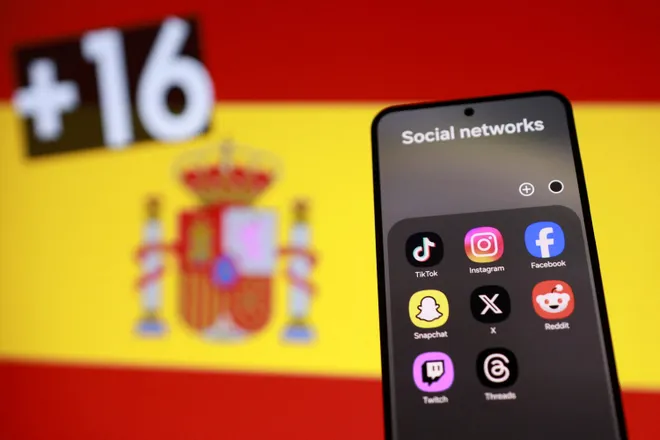
On Feb. 3, Pedro Sánchez, the prime minister of Spain, proposed a bill that would ban social media use for children under 16. Sánchez said the legislation would protect minors from what he called the “digital wild west”, addressing the dangers of online platforms.
What the bill would do
Mr. Sánchez introduced the proposal following Australia’s social media ban. Australia was the first country to pass a bill that bans social media access for children under 16. Over 4.7 million Australian teens and children have been removed from platforms, including TikTok, Instagram, Facebook, Snapchat and YouTube.
Spain’s proposal would be added as an amendment to an existing digital protection bill. It would raise the age of consent for access of personal data to 16. Children younger than 16 would need explicit parental consent to use social media platforms.
Sánchez said he hopes the measure passes soon. He said the goal is to shield children from illegal, inappropriate and hateful content.
“The power of the state is there to protect democracies from the attacks they suffer and also children and adolescents from that toxic, unpunished world that social media has unfortunately become,” Sánchez said.
About 90% of teenagers in Spain use social media, and 1 in 10 minors has experienced cyberbullying, according to government data. Sánchez said he believes the ban would help reduce those numbers.
Public reaction
The proposal has drawn mixed reactions.
Critics argue the proposal could limit free expression and reduce opportunities for young people to connect online.
Elon Musk, owner of X, went so far as to call Sánchez “a traitor to the people of Spain” in response to the proposal.
Other platforms criticized Australia’s bill, including Reddit, which is pursuing a legal challenge.
Many advocates for children’s mental health support the proposal.
Daisy Greenwell, co-founder of Smartphone Free Childhood, believes that children’s well-being should be prioritized over the profit of tech companies and contends that the issue extends beyond one country.
“This is a global issue, and governments everywhere are under pressure to respond,” Greenwell said.
The United States has proposed a similar bill, the Kids Off Social Media Act, which would ban children younger than 13 from maintaining social media accounts and restrict content for users under 17. The bill has not been passed, but it has caught the attention of teenagers across the country.
What Edmond North thinks
Faith Tan, a sophomore, said raising the age limit to access social media could be helpful but is not a cure-all.
“I don’t think waiting until 16 will prevent kids from experiencing cyberbullying or seeing toxic content,” Tan said. “But it would prevent kids from early exposure to those things.”
Levi White, a senior, said he supports limiting young children’s exposure to social media but believes the decision should rest with parents.
“The decision should solely lie within the parents and how they choose to parent their children,” White said. “I think a ban encroaches on parents’ freedom.”
Tan added, “I think social media and exposure to it is very formative, but in theory, an age barrier for access would prevent a lot of harm and long-term damage to kids and young adults.”
Lawmakers have not announced when a final vote could take place.