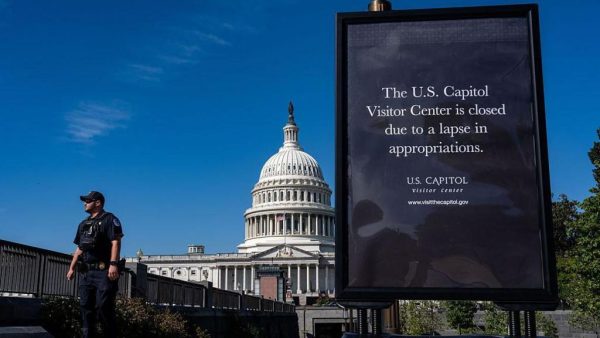
At 12:01 AM on October 1st, the U.S. government officially shut down.
Republicans and Democrats failed to come to an agreement about the federal budget, including whether the Affordable Care Act should be cut or not. As lawmakers continue to dispute the federal government’s budget for this fiscal year, federal workers’ salaries are withheld and Americans are uncertain of the future of their health insurance.
September 30th marked the end of the U.S. federal government’s fiscal year. The fiscal year is, as the name suggests, a full 364 days between October 1 and September 30. Once the fiscal year ends, the federal government’s budget for the next fiscal year should be agreed upon.
Of course, there are bound to be major disagreements that sometimes surpass the deadline; the U.S government has shut down twenty times since 1976. Usually, it’s only down for a few days or so, and if the deadline needs to be extended further, small, temporary bills can be passed to stall for time. The last and longest shutdown in history was in 2018, when disputes over the funding of Trump’s wall led to a shutdown that lasted 34 days.
Federal workers bear the brunt
Federal workers are furloughed— not paid or offered work at all—during the government shutdowns. Those who are considered necessary for maintaining public safety, also known as essential workers, are still required to work without pay. During the 2018 shutdown, federal workers reportedly went to food banks and struggled to afford gas to even drive to work.
How cutting the Affordable Care Act will affect you
The topic of contention regarding the federal government’s budget this year is the Affordable Care Act (ACA), also known as Obamacare. ACA is a healthcare reform passed by Barack Obama in 2010 to make healthcare more affordable and accessible to Americans. Republicans have long criticized the reform. Unfortunately, this debate of whether to keep it or not has extended past the fiscal deadline, as some lawmakers assert that the ACA and Medicaid are using millions of dollars to provide healthcare for illegal immigrants. However, according to the official website for U.S. federal legislative information, Medicaid only covers lawful immigrants.
Cutting the ACA would have devastating consequences on the roughly 20 million Americans who benefit from it. The ACA makes health insurance more accessible for self-employed or part-time workers, who are less likely to be offered insurance by their employer. If the ACA is cut completely, those who rely on its financial support may be left without health insurance altogether, to the detriment of 44% of Americans who struggle to afford health care.
There is no end to the shutdown in sight.