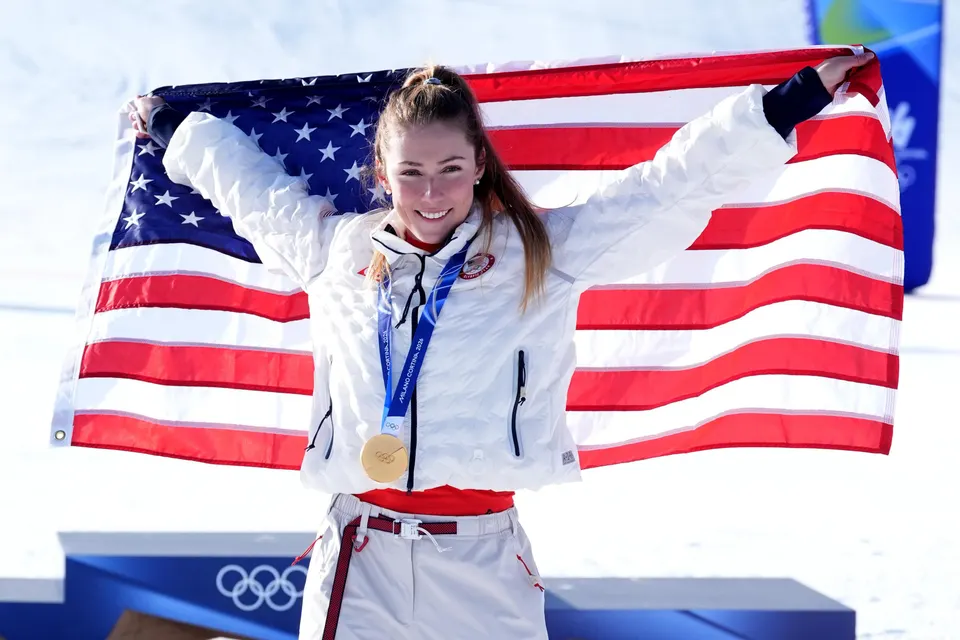
Alysa Liu’s journey to gold was not a straight path, but rather one filled with curveballs and hardships. The 20-year-old figure skater’s Olympic arc was both historically and emotionally symbolic.
Making history
Liu’s win marked the first gold medal in 24 years for the U.S women’s individual figure skating team. The last gold medal was awarded in 2002 to Sarah Hughes.
Not only did she break the win drought, she also made history by embracing her style.
Liu’s performance was pure gold — which matched her hair and her sparkling dress. Her routine to Donna Summer’s “MacArthur Park” was not only technically masterful, but it also radiated pure joy. Liu successfully landed seven triple jumps and two double axels, making it look easy and fun. Her contagious smile made her figure skating’s sweetheart.
She finished with a career-best, flawless performance that scored her a total 226.79 points.
Liu was predicted to win a medal at the Olympics; however, many believed gold would be a “difficult path” due to her return from retirement.
Her journey
Liu’s win was especially impactful due to her mental health struggles. Many fans were shocked to discover the skater who is always smiling took a prolonged break from her sport due to depression.
She began training at five years old, which led to her eventually being burnt out and feeling isolated from her peers. At 16, Liu decided to retire from skating and focus on her mental health. In doing so, she was able to focus on school and her friendships, allowing her to live a normal teenage life.
Impact on mental health
Liu has been very transparent with her struggles, which has helped many people with their own journeys, taking away the taboo around mental health and depression.
She encourages athletes to advocate for themselves, saying, “If [pursuing your sport is] really such a struggle, I would say definitely take that break. Don’t be scared to do that. You’ll be scared of failure, [but] honestly, trying new things will definitely give you a different outcome.”
Many athletes experience dependent performance identity. This unwavering need to excel creates struggles such as anxiety and depression.
Liu’s breakaway from this cycle makes her win that much more significant, since she proved that a needed break is not career-ending.
Additionally, when she returned to skating, she took her career into her own hands.
Instead of others dictating what she would do, Liu was empowered to make her own decisions. She selected her costumes and the music for her performances, and her diet and training schedule were also decided on her terms.
Liu’s return to skating was filled with an even greater spark than before, proving her break not only helped her mentally, but it also helped her craft. By taking control, she fell in love with skating again.
“Don’t compare yourself to anybody. Stay on your own path, your own journey, and focus on yourself,” Liu said.