The Broken Arrow community met and voted against the upcoming construction of a mosque on January 12, 2026. Several citizens felt concerned that building a mosque would negatively affect the community.
Even though there are approximately 90 Christian churches and no mosques, the Broken Arrow City Council voted 4-1 against the project. The reason for the denial was primarily due to traffic changes, increased street congestion, and the land not being ready for commercial use.
However, the rezoning was denied only after public opposition. This opposition was not focused on how the land would be used, but on the intention to build an Islamic place of worship.
“This is a Christian nation; Islam is incompatible with Christianity; Islam is incompatible with our constitution,” said Broken Arrow resident Cheri Thomas to a Newson6 reporter.
Other residents support the construction project.
“We are not a Christian nation. We were founded as a secular government that did not favor any one particular religion over another. That was the reason that we broke away from England in the first place,” said Tulsa attorney Bob Nelon.
The right to religious freedom
The First Amendment of the United States Constitution states that Congress cannot make a law that contradicts the freedom of religion. Following under freedom of speech, it is unconstitutional to prohibit the practice or expression of any religion.
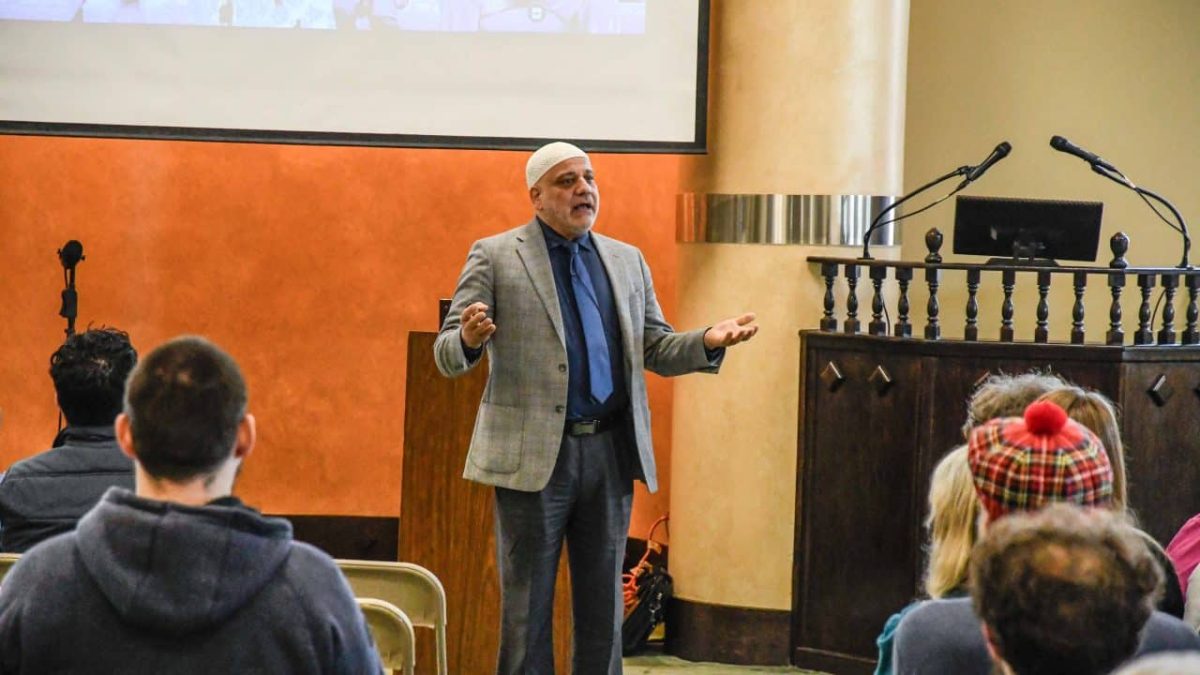
Dr. Imad Enchassi, the imam of the mosque in Oklahoma City, the Islamic Society of Greater Oklahoma City (ISGOC) was disappointed with the vote but felt staying quiet would allow others to control the narrative.
The discrimination against Muslims is nothing new. Many people are afraid of the unfamiliar, and the differences between Christianity and Islam are often focused on.
However, the similarities between Islam and Christianity are often overlooked.
More similar than you think
Islam is a religion that believes Jesus was a human prophet who brought people to worship and believe in God. This is similar to how Christians believe Jesus Christ is a part of the Holy Trinity and came to save us from our sins.
The Qur’an is the book of guidance and messages from God for Muslims. It is similar to the Christian Bible; however, instead of the Qur’an being written by approximately 40 different people, the Qur’an is believed to be God’s final message as recited to Muhammad.
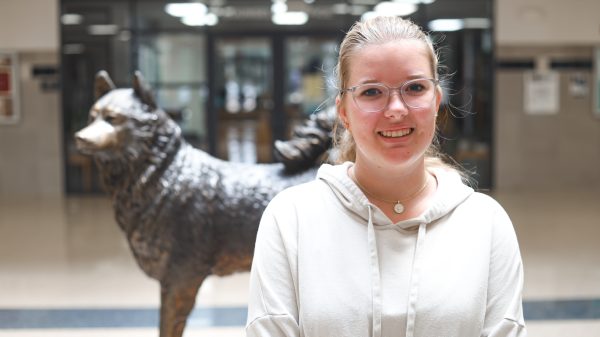
As the granddaughter of two Christian ministers, I grew up knowing that their roles in their churches were to support others as they walk the journey with God, giving advice when needed, as well as listening when needed. Similar to, if not the same as, the role of an imam.
Dr. Enchassi explains how an imam’s role is to be a listener, a bridge-builder and a servant — accountable to God and responsible to the community.
A Christian church’s purpose is to bring people together to worship God and build a community full of faith and love.
A mosque’s purpose is the same thing.
A United Methodist Church, a First Christian Church and an Islamic Mosque all offer services and support to their communities based on God’s command to love thy neighbor.
Does it matter if that love comes from a religion different from your own?
Starting next fall, I will begin my journey of becoming an ordained minister in the United Methodist Church. I will be following in the footsteps of many of my relatives as I pursue a degree in religious studies at Oklahoma City University.
Once I become a minister, I look forward to working with Dr. Enchassi to teach the youth in my community about the similarities and differences between Christianity and Islam. In doing so, I hope to connect our two communities in sharing God’s love through service, support and understanding.
Even though the rejection of the mosque in Broken Arrow is a setback for the Muslim community, it’s important to remember that there are still people who realize that connection is more important than fear.
Dr. Enchassi emphasizes, “Working together doesn’t erase our differences; it honors them while focusing on righteousness and the common good we are all called to serve.”